Unity
Before You Begin
To integrate the Bidease SDK, you need an active publisher account on the Bidease Monetize platform.
Prerequisites:
- Supported Unity versions: Unity 2022 LTS or Unity 6000
- Minimum iOS deployment target: iOS
13.0 - Minimum Xcode:
16.4 - macOS host with CocoaPods installed (required by Unity's External Dependency Manager when building for iOS)
1. Switch Build Platform
Open File → Build Profiles and switch the active platform to iOS.
2. Verify Mediation Plugin
Install the Google Mobile Ads Unity plugin via the Unity Package Manager (or by importing the .unitypackage). Make sure the plugin is up to date and that your AdMob App ID is set in Assets → Google Mobile Ads → Settings.
3. Configure Player Settings
Go to Edit → Project Settings → Player → iOS → Other Settings and verify:
- Target minimum iOS Version is set to iOS
13.0or higher. - Architecture is set to ARM64.
The Bidease pods require this minimum target to resolve — Unity's External Dependency Manager will propagate the value into the generated Podfile's platform :ios directive.
4. Import the Bidease Adapter Package
Download AdMob AdapterIn Unity, go to Assets → Import Package → Custom Package… and select the downloaded file. Import all included assets.
After import, verify that the following files are present in your project:
Assets/BideaseAdmobAdapter/Editor/BideaseDependencies.xml— dependency manifest that pulls the required iOS pods via Unity's External Dependency Manager:
<?xml version="1.0" encoding="utf-8"?>
<dependencies>
  <iosPods>
      <iosPod name="BideaseSDK" version="3.0.1"/>
      <iosPod name="BideaseSDK/AdapterAdmob" version="3.0.1"/>
  </iosPods>
</dependencies>
Assets/BideaseAdmobAdapter/BideaseAdmobBridge.cs— C# bridge used to callSetInitParamsfrom your Unity scripts.
When Unity generates the Xcode project, EDM4U writes these pods into the generated Podfile and runs pod install automatically.
5. Set your App Key
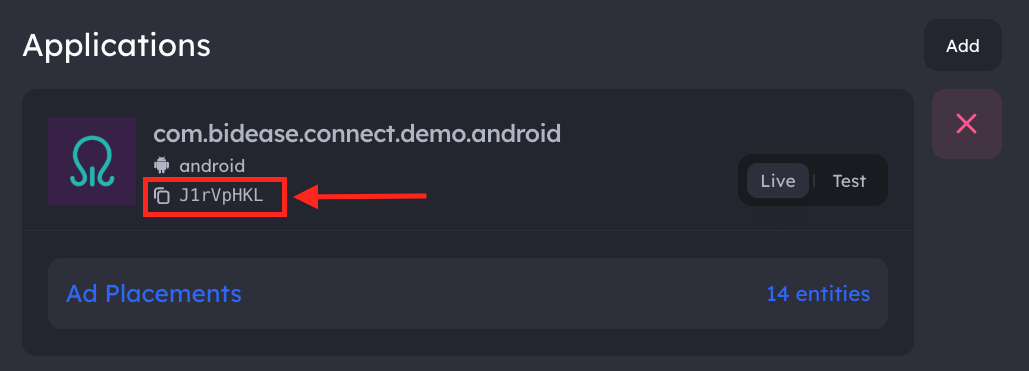
Your App Key is available in the Bidease Monetize dashboard:
- Log in to your account at monetize.bidease.com
- Go to Applications
- Open the required application
- Copy the App Key
Call SetInitParams before initializing the Google Mobile Ads SDK:
BideaseAdmobBridge.SetInitParams("YOUR_APP_KEY");
MobileAds.Initialize(initStatus => { });
YOUR_APP_KEY with the App Key from your Bidease Monetize dashboard.SetInitParams also accepts an optional customProps dictionary: BideaseAdmobBridge.SetInitParams("YOUR_APP_KEY", new Dictionary<string, string> { ["ipv4"] = "203.0.113.17" }). Privacy signals are sourced from GADMobileAds.requestConfiguration at ad-load time and aren't configurable from the Unity bridge.
The Bidease SDK initializes automatically when AdMob triggers the mediation adapter — no additional init call is needed.
6. Configure the Mediation Dashboard
Follow the step-by-step instructions for adding Bidease custom events in AdMob mediation: Add Custom Events in AdMob Mediation →
Before configuring AdMob, set up your application and create your first test placements in the Bidease Monetize UI. Monetize UI setup guide →
7. SKAdNetwork IDs
The Bidease SDK supports SKAdNetwork so partner networks can attribute installs when IDFA is unavailable. Add the SKAdNetworkItems entry to your Info.plist:
- In Xcode, select Info.plist in the Project navigator.
- Right-click Info.plist → Open As → Source Code.
- Copy the SKAdNetworkItems array from the file below and paste it into your Info.plist.
8. Test Mode
Option 1: Enable via Code
Add the test-mode pod to your BideaseDependencies.xml:
<?xml version="1.0" encoding="utf-8"?>
<dependencies>
  <iosPods>
      <iosPod name="BideaseSDK" version="3.0.1"/>
      <iosPod name="BideaseSDK/AdapterAdmob" version="3.0.1"/>
      <iosPod name="BideaseSDK/TestMode" version="3.0.1"/>
  </iosPods>
</dependencies>
Option 2: Enable via Dashboard
- Go to Applications and open the required app
- Navigate to Test Devices and add the devices you want to test on — use IDFA (iOS)
- Enable Test for the application
9. QA Checklist
- Test Mode provides nearly 100% fill — expected behavior for QA only.
- Disable Test Mode before submitting your app to the App Store.
- Ensure IDFA tracking is enabled on your test device so the Bidease team can review logs.
- If you run into any issues, contact your Bidease account manager.