iOS
1. Install the SDK
To integrate the Bidease SDK into your Xcode project using CocoaPods, add the following to your Podfile:
platform :ios, '12.0'
...

pod 'BideaseSDK/AdMobAdapter'
Then run the following commands in your macOS terminal (or via CocoaPods.app):
$ cd path_to_Podfile
$ pod update
⚠️ Make sure to always use the latest available SDK versions from Bidease.
Test mode
Once you’ve implemented the SDK, you can test ads before release.
Add additional pod to enable test ads:
pod 'BideaseSDK/AdMobAdapter'
pod 'BideaseSDK/TestMode'
⚠️ Important:
- Test on US geo during QA to ensure proper ad delivery and fill rates.
- Test Mode provides nearly 100% fill for QA testing, but must be disabled before submitting the app to the store.
- Ensure IDFA/GAID tracking is enabled during QA so the Bidease team can review logs and assist with troubleshooting if needed.
2. Add Required Keys
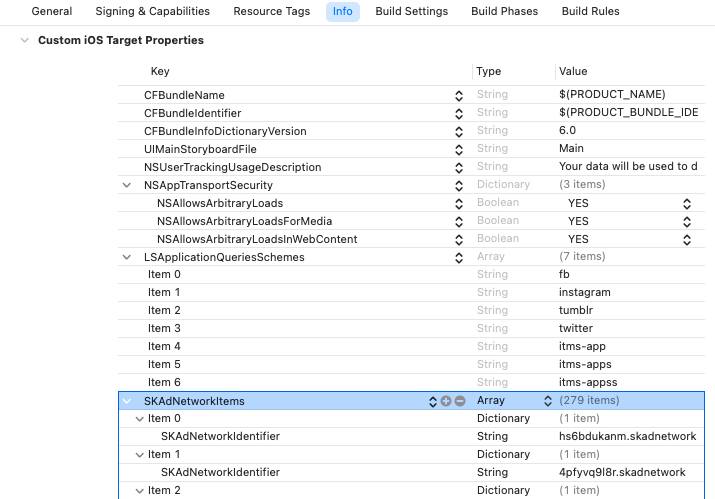
In your Xcode project settings, navigate to: YourProject ➡️ Info ➡️ Custom iOS Target Properties. Right-click on any row in the table and choose Show Raw Keys/Values. Then add the following:
- Add the key
NSUserTrackingUsageDescriptionwith the value:Your data will be used to deliver personalized ads to you. - Add the key
LSApplicationQueriesSchemesas an array with the following values:fb,instagram,tumblr,twitter,itms-app,itms-apps,itms-appss - Locate the key
NSAppTransportSecurity:- If it doesn’t exist, create it.
- Expand the section (triangle icon) and add these subkeys:
NSAllowsArbitraryLoads→ YESNSAllowsArbitraryLoadsForMedia→ YESNSAllowsArbitraryLoadsInWebContent→ YES
- Add SKAdNetworkItem identifiers into the
SKAdNetworkItemsarray. You can copy the required identifiers from the following file: SKAdNetworkItems.
The final setup in your Info.plist should look similar to the example below:
3. Add Custom Events in Admob Mediation
- Navigate to your Google AdMob account: https://admob.google.com/v2/home
- Go to Mediation section
- Select Waterfall sources
- Click Custom Event and manage/add mapping custom Event
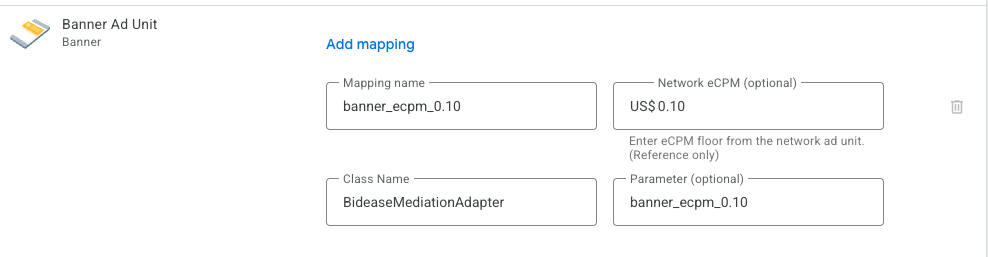
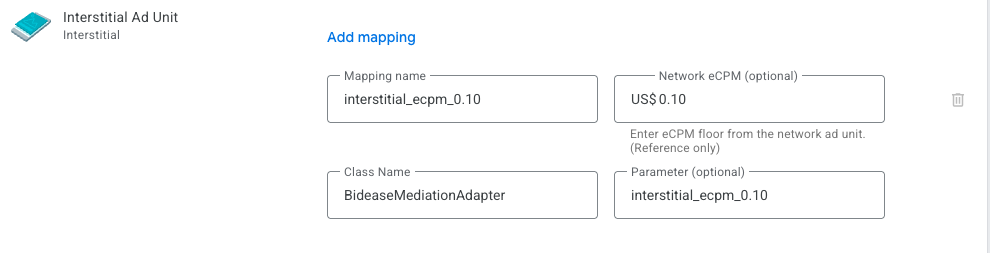
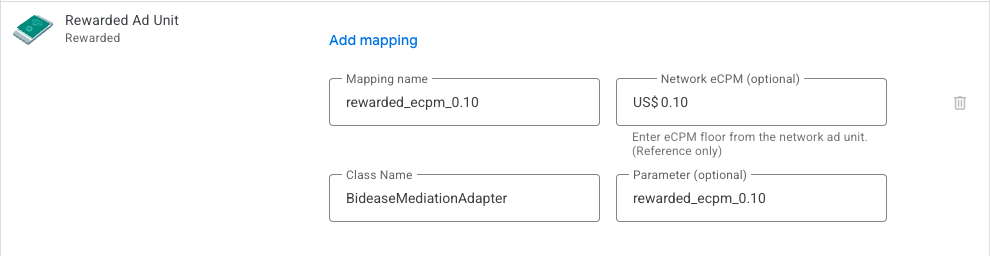
- For each ad format and price point, you'll create a custom event with specific parameters. The configuration follows a standardized naming convention that encodes the floor price. Fill in the custom event fields as follows:
Field | Value / Description |
|---|---|
Mapping Name | Use the format:
Example: |
Network eCPM | Enter the same floor price value as in the Mapping name (the X.X value) |
Class Name |
Note: This class name is the same for all ad formats |
Parameter |
Important: The placement_id value must exactly duplicate your Mapping name |
Here are how custom events should look like for each ad format:
Banner
Interstitial
Rewarded
- After creating your custom events, you need to add them to your mediation groups to activate Bidease demand in your waterfall. Navigate to Mediation → Mediation groups
- Select an existing mediation group or click Create mediation group
- Click Add Ad Units and select the ad units where you want Bidease demand
- Click Add Ad Sources and add the custom events you created for each ad format
💡 Tip: You can create multiple custom events with different floor prices for the same ad format to optimize your waterfall performance.
Updated 14 days ago