Android
1. SDK Integration
Add the following dependencies to your app’s build.gradle file:
dependencies {
    ...
    implementation 'com.bidease:levelplay-adapter:1.6.2'
    implementation 'com.bidease:bidease-mobile:1.6.2'
    ...
}
⚠️ Make sure to always use the latest available SDK versions from Bidease.
Test mode
Once you’ve implemented the SDK, you can test ads before release.
Add the following dependency:
implementation 'com.bidease:bidease-mobile-test-mode:1.6.2'⚠️ Important:
- Test on US geo during QA to ensure proper ad delivery and fill rates.
- Test Mode provides nearly 100% fill for QA testing, but must be disabled before submitting the app to the store.
- Ensure IDFA/GAID tracking is enabled during QA so the Bidease team can review logs and assist with troubleshooting if needed.
2. Add Custom SDK Network
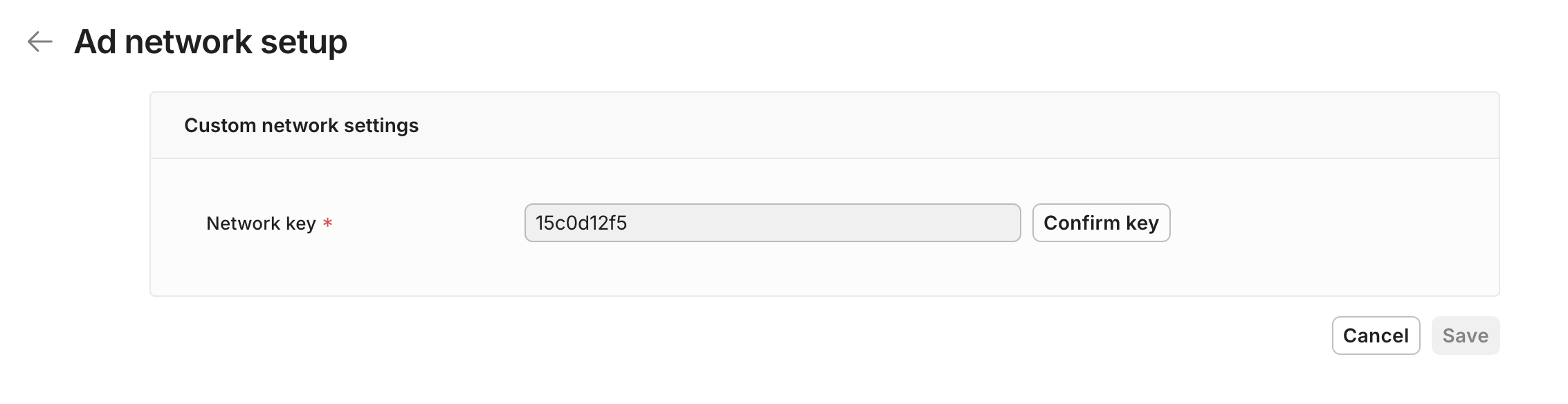
Log in to your Unity LevelPlay account and navigate to Mediation ➡️ Setup ➡️ Networks.. At the bottom of the page, click + Add custom network.
Enter the Network Key: 15c0d12f5, confirm it, and add Bidease SDK as a new network.
For Reported Revenue, select Rate based revenue.
3. Manage ads
From the dropdown menu above, select the app you’d like to configure. In the Custom section, choose Bidease SDK. Supported ad formats: Rewarded, Interstitial, Banner.
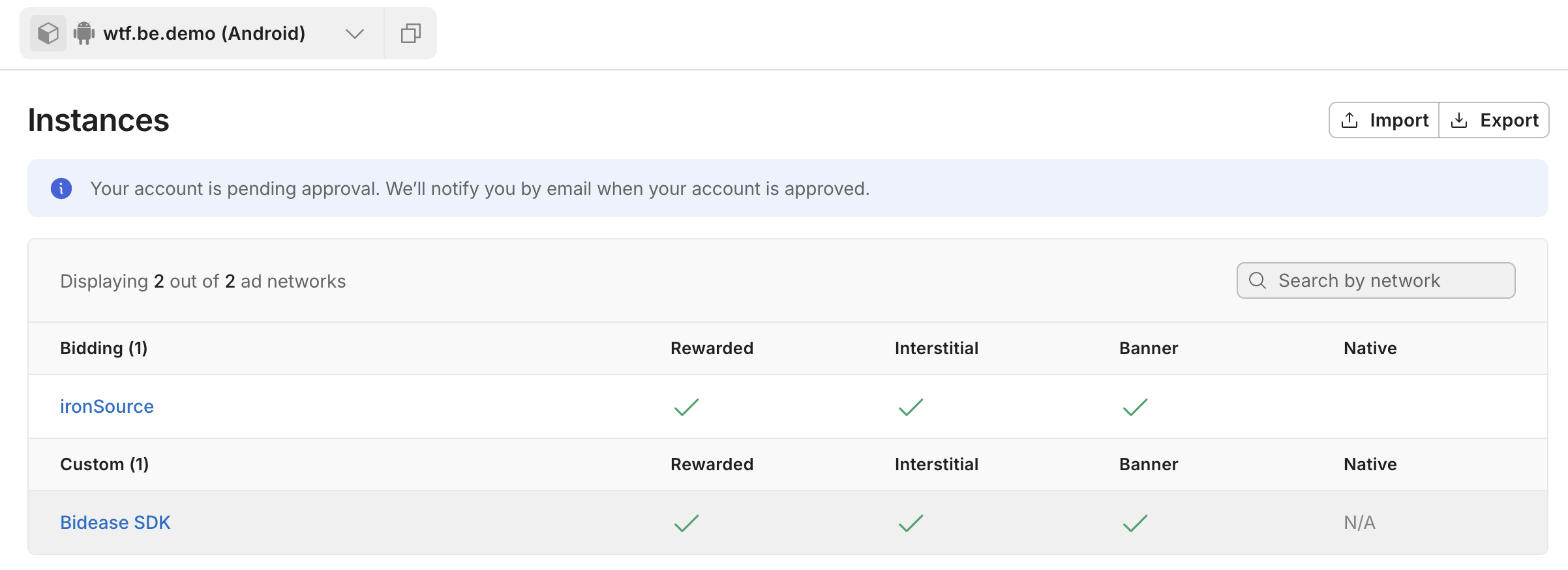
Configure the fields as follows:
- Placement ID: use the format
AdFormat_ecpm_X.X, where ecpm is the required separator and X.X is the floor price value (any number).- Example:
Interstitial_ecpm_1.3➡️ floor price = $1.3 - Example:
Banner_ecpm_0.5➡️ floor price = $0.5
- Example:
- Instance Name can be the same as your Placement ID.
- Rate: enter the same floor price as in the Placement ID.

⚠️ Remember to save all changes to apply your configuration.
Next steps
- iOS setup → LevelPlay · iOS
Updated 14 days ago